Table of Contents
What is a Commercial & Industrial BESS?
A commercial & industrial BESS is a large-scale battery system used for factories, data centers, telecom stations, shopping malls, industrial parks, microgrids, and other business facilities.
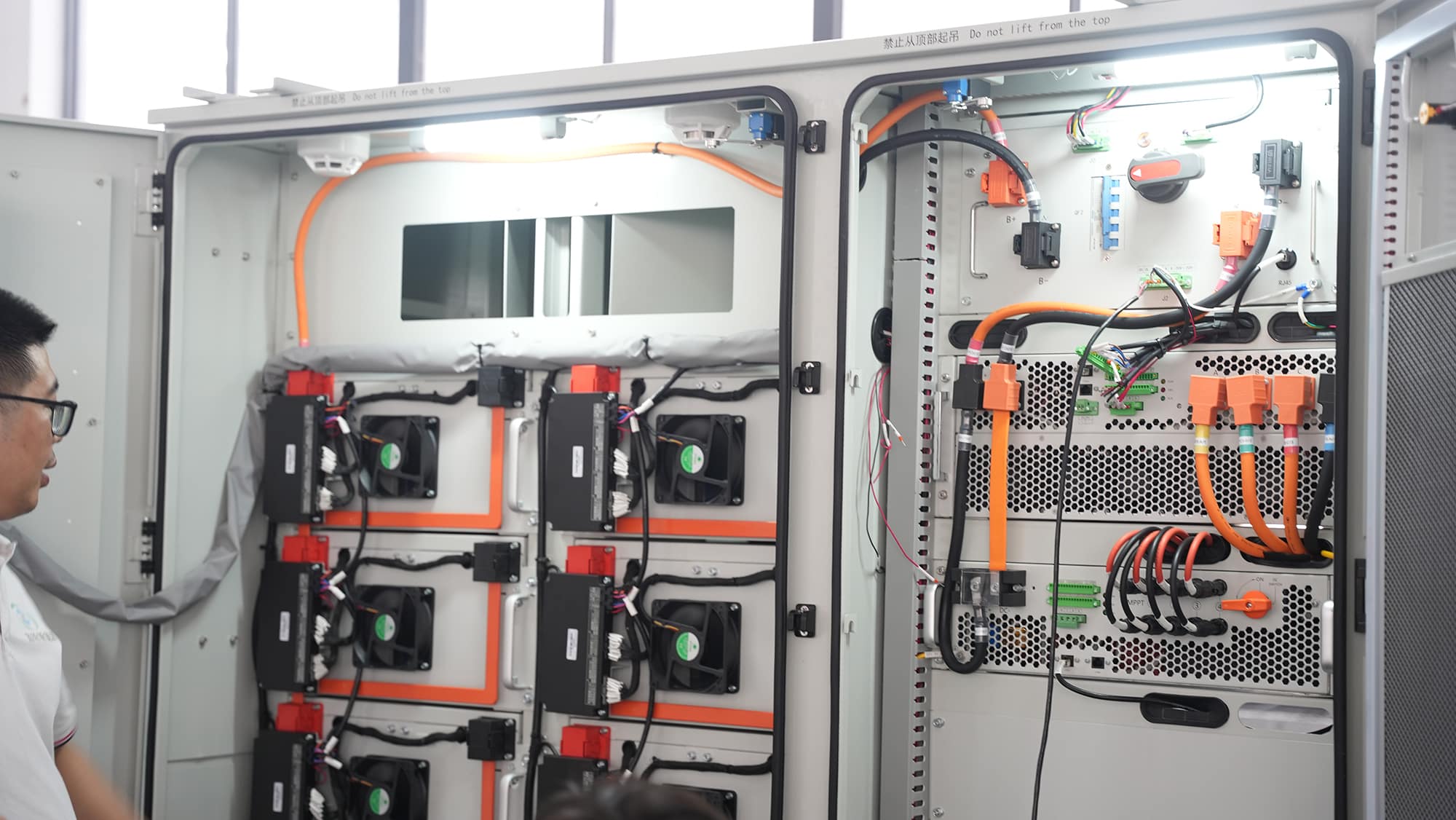
It typically includes:
Battery packs or modules (LiFePO4 or NCM)
BMS (Battery Management System)
PCS (Power Conversion System)
EMS (Energy Management System)
Fire protection & cooling system
Container or cabinet structure
Compared with home energy storage, C&I BESS features higher voltage (400V/800V), larger capacity (100–5000 kWh), and more advanced safety design.
Definition of Battery Energy Storage Systems (BESS)
Battery Energy Storage Systems (BESS) are systems that use batteries to store electricity for later use. These systems help balance energy supply and demand by storing energy when it’s plentiful (such as during the day with solar energy) and releasing it when demand is higher or supply is lower. BESS are crucial for enhancing grid stability, integrating renewable energy, and improving energy efficiency across various sectors.
Key Factors to Consider When Choosing a C&I BESS
1. System Voltage (400V / 800V)
Voltage is the most important parameter because it determines inverter compatibility, efficiency, and system safety.
400V BESS(ours 215kWh)
Most common in factories and commercial buildings
Compatible with majority of PCS/inverters
Ideal for 100–1000 kWh projects
Lower installation cost
800V BESS
Higher efficiency
Lower current → lower heat
Suitable for MW-level projects
2. Battery Chemistry (LiFePO4 vs NCM)
| Type | Advantages | Suitable for |
|---|---|---|
| LiFePO4 (LFP) | High safety, long cycle life (6000–12000+), stable | C&I BESS, microgrids, peak shaving |
| NCM | Higher energy density, but less safe | Space-limited projects |
3. Cycle Life & System Life
Two concepts:
Cell cycle life = 6000–12000 cycles (depending on the LFP level)
System life = 8–15 years (Depending on BMS, cooling, and balancing strategies)
Cell cycle life exceeds 12,000 times
System life exceeds 10,000 times
4. Cooling Technology (Air Cooling vs Liquid Cooling)
Air Cooling
Cheaper
Simple structure
Suitable for <100 kWh systems
Liquid Cooling (VoltShiny’s Products)
Temperature difference < 3°C
Improves cycle life up to 10%
Higher safety
Better for large C&I BESS
5. Safety System (Top Priority)
Pack-level active fire protection
Early warning system(battery health monitoring)
Cell-level thermal runaway isolation
Certified energy-storage-grade cells
Our Products Equipped with multi-layer safety protection, including active fire suppression, thermal runaway detection, cell-level isolation, and real-time health monitoring.
6. PCS Configuration (AC-coupled / DC-coupled)
AC-coupled BESS
Flexible
Compatible with most buildings
Easiest integration
Your 215kWh can use AC solution
DC-coupled BESS
Higher efficiency
Suitable for PV + BESS hybrid systems
7. EMS (Energy Management System)
Peak shaving / valley filling
Demand response
Backup power switching
Real-time monitoring
Remote OTA upgrade
Multi-machine parallel control
8. Certifications & Compliance
CE
UL 9540 / 1973 / 9540A(USA)
UN38.3(Cells)
MSDS
IEC 62619
How to Match the Right BESS to Your Application
1. Peak Shaving & Bill Reduction
100–500 kWh
400V
1–2 hour systems
2. Factory Backup Power
200–1000 kWh
400V or 800V
Requires fast switching (UPS-like PCS)
3. Microgrid & Solar Projects
500–2000 kWh
Prefer DC-coupled
Liquid cooling recommended
4. Data Center / Critical Loads
800V
High redundancy
Advanced fire control
Why Choose Voltshiny / Shiny Battery
Voltshiny provides customized commercial and industrial BESS solutions from 100 kWh to 2 MWh, featuring:
215 kWh 400V liquid-cooled BESS (20ft container optional)
12,000+ cycle life LiFePO4 energy-storage-grade cells
Highly integrated design with 30% reduced footprint
Temperature difference < 3°C
Pack-level active fire protection
PCS + EMS full set delivery
Global certification support (CE, UL, UN38.3, MSDS)
FAQ
Q1: What is the standard voltage for industrial BESS?
Most systems use 400V for C&I, 800V for MW-level projects.
Q2: How long does a BESS last?
8–15 years depending on cell cycle life and cooling technology.
Q3: How to estimate required capacity?
Typical sizing = peak power × required backup hours.
CTA:
Contact us today to get a customized quotation for your commercial & industrial BESS project.