Table of Contents

System Overview
Peak Shaving & Bill Reduction
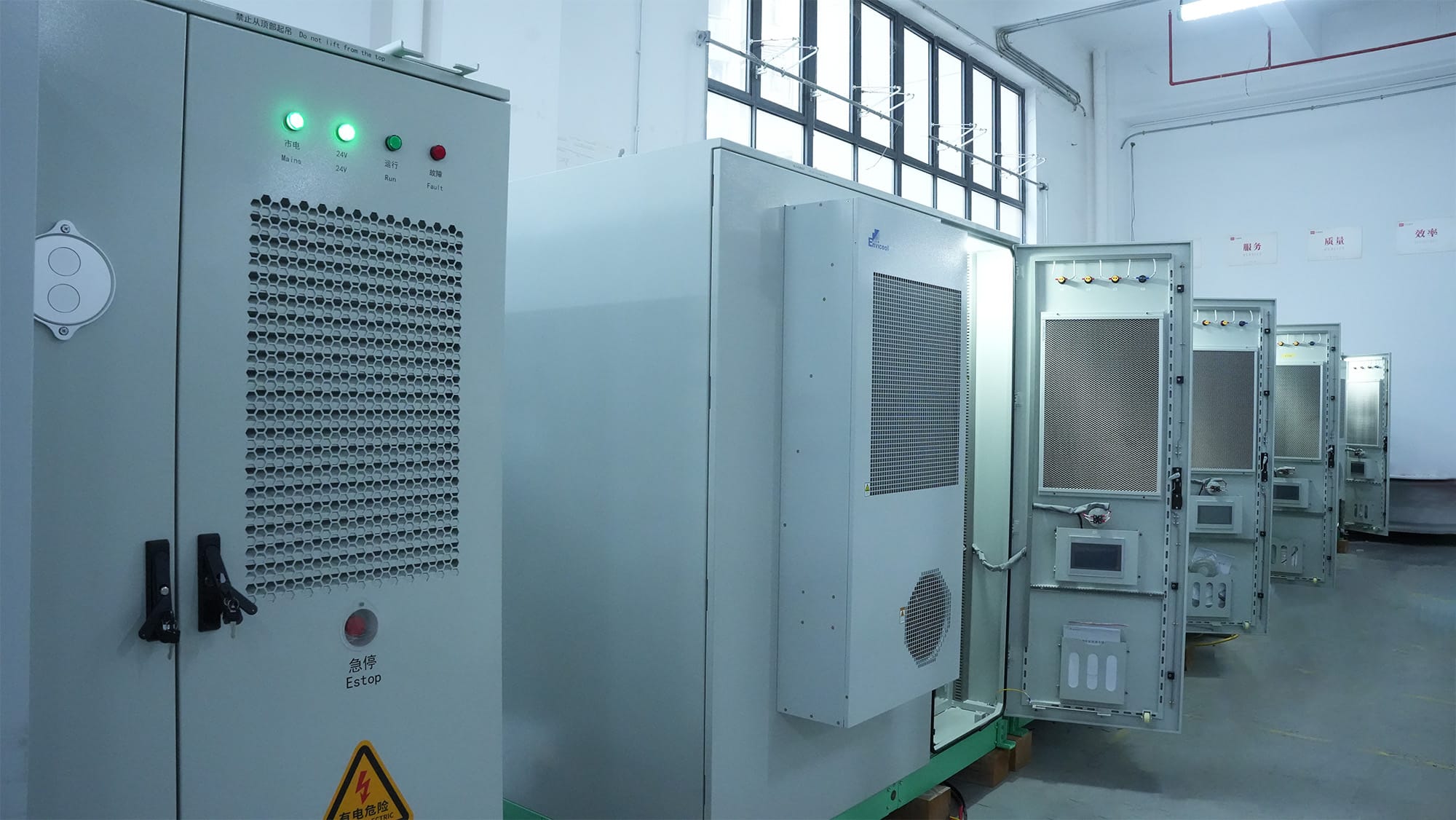
The 240 kWh PV-ESS + Grid system adopts an integrated cabinet design, combining:
Photovoltaic (PV) power generation
Battery energy storage (ESS)
Grid connection
Backup power for critical loads
Rather than treating these elements as independent devices, the system is designed as a coordinated energy platform, managed by an intelligent control architecture.
Energy Storage System (ESS)
The energy storage system is responsible for safely storing electrical energy and making it available when required.
Key Components
Lithium battery packs (typically LiFePO₄ chemistry)
Battery cabinet and internal racks
Battery Management System (BMS)
High Voltage Box (HV Box) with:
Main contactors
Pre-charge circuit
DC fuses and protection
Voltage and current sensing
The ESS focuses exclusively on battery safety, monitoring, and availability, without participating in grid control or energy dispatch decisions.
Power Conversion System (PCS)
The Power Conversion System is the core power interface between the battery system and the AC grid.

PCS Configuration
Bidirectional energy storage PCS supplied by IN-Power
Supports both grid-connected and off-grid operation
Provides voltage and frequency regulation during islanded mode
The PCS executes energy flow commands issued by the EMS, converting power between DC and AC with high efficiency and stability.
PV Integration System (MPPT)
To enable efficient solar utilization, the system includes a dedicated PV integration subsystem.

MPPT Functionality
MPPT (Maximum Power Point Tracking) modules manage PV input
Support multiple PV strings
Continuously optimize PV operating points under changing conditions
By integrating MPPT, the system evolves from a conventional BESS into a true PV-ESS solution, capable of maximizing on-site solar energy usage.
Grid and Load Interface System
This subsystem defines how power is delivered to the grid and to on-site loads.
AC Distribution
Primary AC distribution for grid connection
Secondary distribution for control and auxiliary circuits
Metering and protection devices compliant with grid requirements
Static Transfer Switch (STS)
Installed on the AC side of the system
Enables millisecond-level transfer between grid supply and energy storage
Ensures uninterrupted power supply for critical loads
The STS is typically applied only to selected critical loads rather than the entire facility.
Control & Energy Management System (EMS)
The Energy Management System (EMS) serves as the system’s control center.
EMS Responsibilities
Coordinating PV generation, battery charging, and discharging
Optimizing self-consumption and peak shaving strategies
Managing backup power operation
Controlling PCS and STS operating modes
A local HMI and communication interfaces allow real-time monitoring, data logging, and remote diagnostics.
Thermal Management and Safety System
Thermal Management

The system uses an air-cooled thermal management design, including:
Industrial cabinet air conditioners supplied by Envicool
Optimized airflow channels
Temperature sensors linked with BMS and EMS
This ensures stable operating temperatures for batteries and power electronics, extending system lifespan.
Safety and Fire Protection
To enhance operational safety, the system integrates multiple protection layers:
- Smoke and temperature detectors

- Aerosol fire suppression system for cabinet-level fire protection

- Automatic shutdown logic coordinated across BMS, PCS, and EMS

Explosion relief valve
Door interlocks and emergency stop (E-Stop)
The aerosol fire suppression system provides rapid fire suppression without water or external piping, making it well suited for compact commercial and industrial energy storage cabinets.
Typical Application Scenarios
Commercial and industrial PV self-consumption
Peak shaving and electricity cost optimization
Backup power for critical loads
Distributed energy and microgrid projects
Conclusion
The 240 kWh PV-ESS + Grid system integrates energy storage, power conversion, PV integration, intelligent control, and comprehensive safety design into a unified solution.
By combining:
INVT PCS for reliable power conversion
MPPT-enabled PV integration
STS-based critical load protection
Advanced thermal management and aerosol fire suppression
the system delivers a safe, efficient, and scalable energy storage platform for modern commercial and industrial applications.
Interested in a 100 kW / 240 kWh All-in-One Outdoor BESS?
The system architecture discussed in this article is implemented in our 100 kW / 240 kWh all-in-one industrial and commercial outdoor BESS cabinet, designed for grid-connected and PV-integrated energy storage applications.
If you are planning a commercial or industrial energy storage project, feel free to explore the product details or contact our technical team for configuration support.
👉 View Product Details
👉 Contact Us for Technical Consultation